


Skip to main content
There should be at least 4 weeks between the first and second dose and at least 8 weeks between doses 2 and 3. Talk to your healthcare provider about what other vaccines your family needs.
Hepatits B
Hepatitis B is a contagious liver infection caused by the hepatitis B virus (HBV), which is passed through blood and other bodily fluids. When someone is first infected, they may develop an acute (short-term) infection. The severity of this infection can range from mild, with few or no symptoms, to severe, potentially requiring hospitalization.
Many people with hepatitis B don’t know they have it, which is why the American Academy of Pediatrics recommends the HepB birth dose. Babies can be infected through an infected parent during birth, caregiver or household contact, or unexpected exposures.
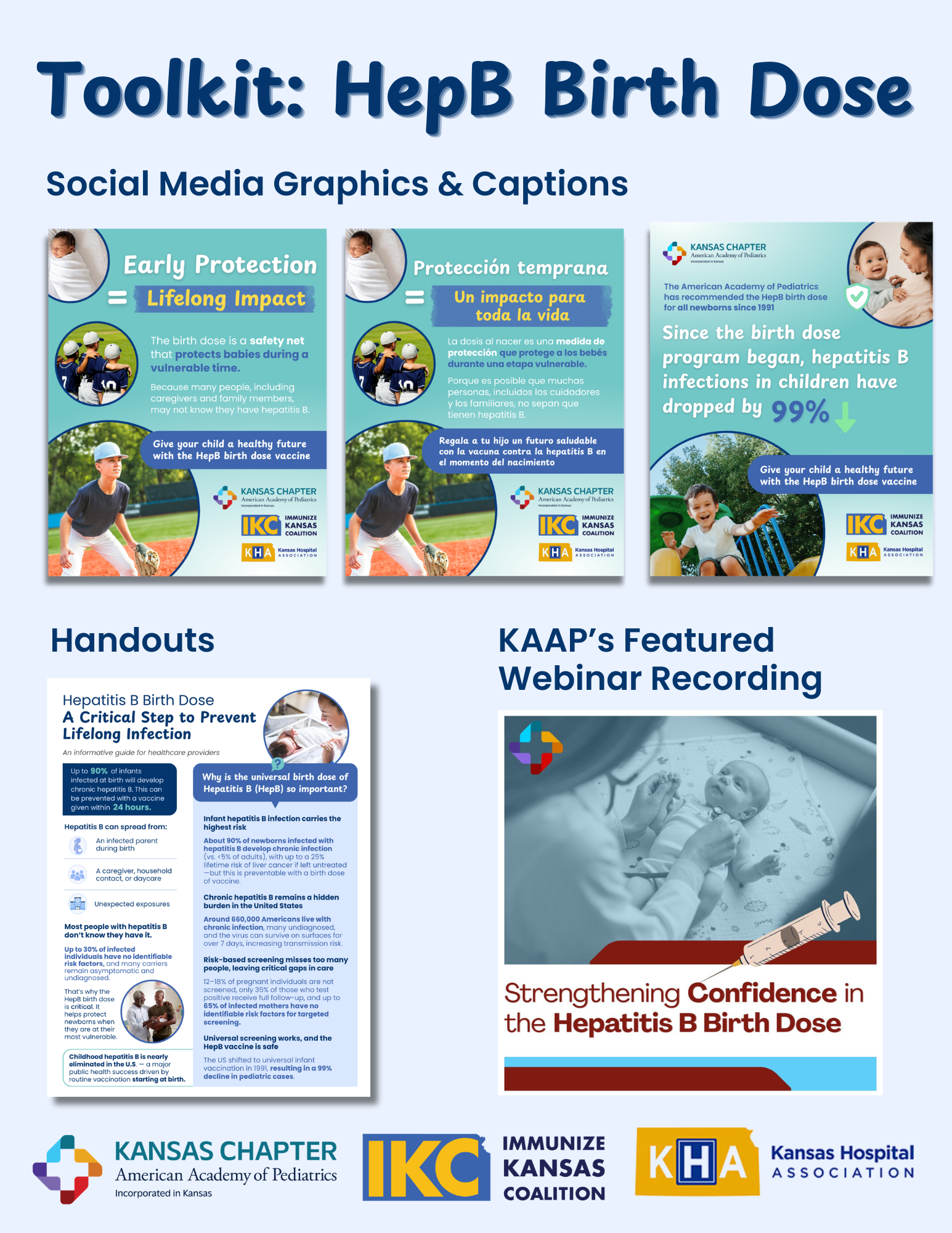
HepB Birth Dose Toolkit
This campaign was created in collaboration with the Kansas Chapter, American Academy of Pediatrics and the Kansas Hospital Association to emphasize the importance of the HepB birth dose. When babies receive the HepB vaccine at birth, they are protected during their most vulnerable time because many people, including caregivers and family members, may not know they
have hepatitis B.
Designed to share with parents and caregivers, the campaign includes our HepB birth dose social media toolkit and print handouts. Viewers will also find the recording and slide deck from KAAP's webinar “Strengthening Confidence in the Hepatitis B Birth Dose,” which features free CME.
HepB Resources
- IKC HepB Handout for Providers
- AAP "Fact Checked" Hepatitis B Vaccine Given to Newborns Reduces Risk of Chronic Infection
- Voices for Vaccines Hepatitis B Resources
- HealthyChildren.org Why Do Babies Need the Hepatitis B Vaccine?
- Vaccinate Your Family University What Everyone Should Know About Hepatitis B
HepB Vaccination
A hepatitis B infection can be acute (lasting less than 6 months) or chronic (lasting 6 months or longer). Acute hepatitis B can lead to chronic hepatitis B. Chronic hepatitis B can last a lifetime and lead to serious illnesses such as cirrhosis and liver cancer. The younger you are when you get hepatitis B, the more likely it will become chronic. There is no cure for hepatitis B, but vaccines can prevent it.
The HepB vaccine is a series of 2-4 doses depending on which vaccine your child gets.
They should get the vaccine at:
- Birth
- 1-2 months
- 4-6 months
There should be at least 4 weeks between the first and second dose and at least 8 weeks between doses 2 and 3. Talk to your healthcare provider about what other vaccines your family needs.
Social: